




Grow with DTF Printing: A Practical Guide to Scaling Your Apparel Business
```Grow with DTF printing by turning original artwork into professional apparel without building a complex printing facility.
DTF transfers help brands test designs, manage smaller orders, reduce inventory risk, and respond quickly to customer demand.
This guide explains how to create a stronger product range, control costs, improve quality, and scale production with confidence.
You will also learn when to order transfers by size and when an uploaded gang sheet may offer a more efficient solution.
Custom apparel businesses need speed, flexibility, and reliable print quality.
Customers expect bright designs, clear details, durable results, and simple ordering.
At the same time, print sellers must protect their margins and avoid unnecessary equipment costs.
Direct-to-film printing supports these goals by making detailed, multicolor garment decoration more accessible.
Businesses can order professional transfers and apply them with a suitable heat press.
This removes many technical steps involved in printing, powder application, curing, and printer maintenance.
DTF PrintHouse provides transfer options for apparel brands, print shops, creators, and local businesses.
The right production model can help you grow while keeping your workflow manageable.
What Is DTF Printing and How Does It Work?
DTF stands for direct to film.
The design is printed onto a coated film before it is transferred onto a compatible textile surface.
A white ink layer supports the artwork and helps the colors remain visible on dark and light garments.
Adhesive powder is added to the printed film and cured before the transfer is pressed.
The finished transfer is placed on the garment and applied with controlled heat, pressure, and time.
This process can reproduce gradients, detailed artwork, small lettering, and multicolor designs.
It can work on cotton, polyester, blends, and many other compatible fabrics.
Every new garment should still be tested because coatings and fabric construction can affect the result.
DTF printing is part of the wider field of digital textile printing.
Why Ready-to-Press Transfers Are Useful
Owning a printer may offer control, but it also creates technical responsibilities.
White ink systems need attention, and printheads require consistent maintenance.
Film, powder, curing conditions, color settings, humidity, and ventilation must also be managed.
Ready-to-press transfers allow you to outsource these stages.
Your business can focus on garment sourcing, pressing, packaging, marketing, and customer service.
You can order custom DTF transfers by size for individual designs.
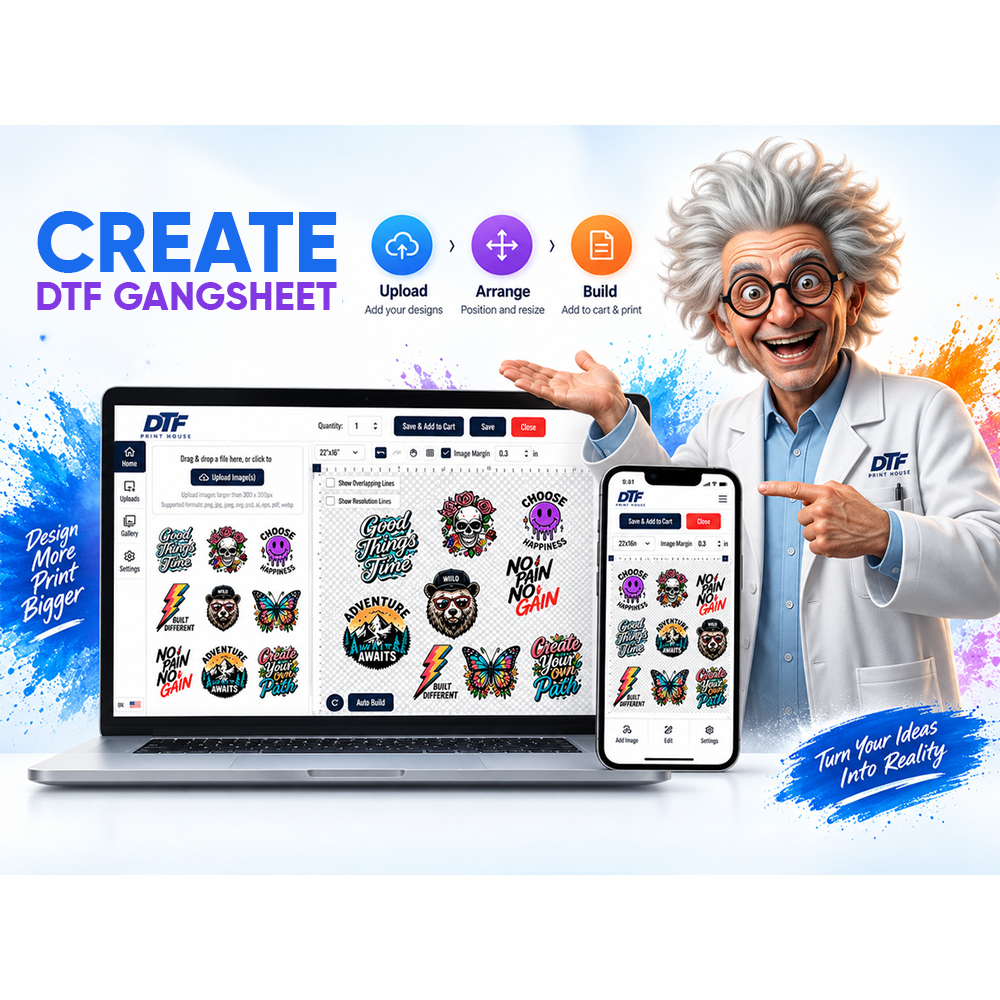
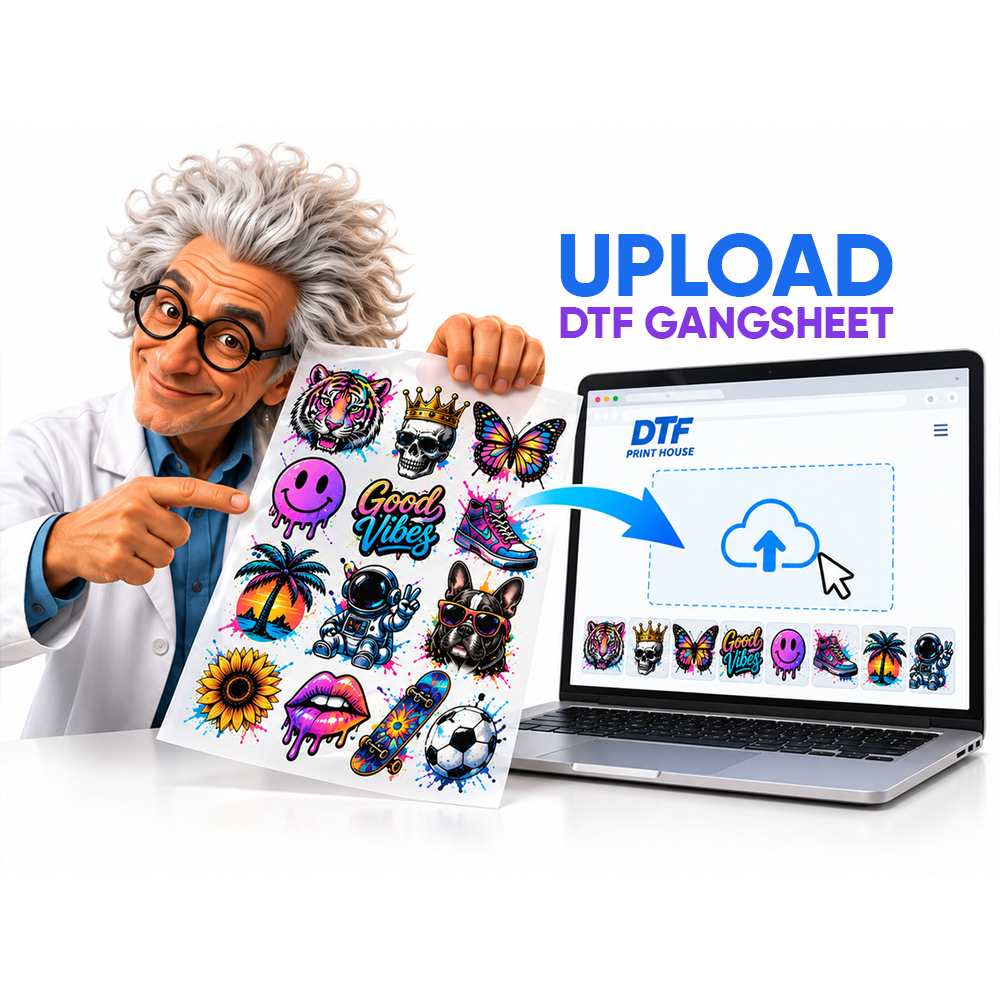
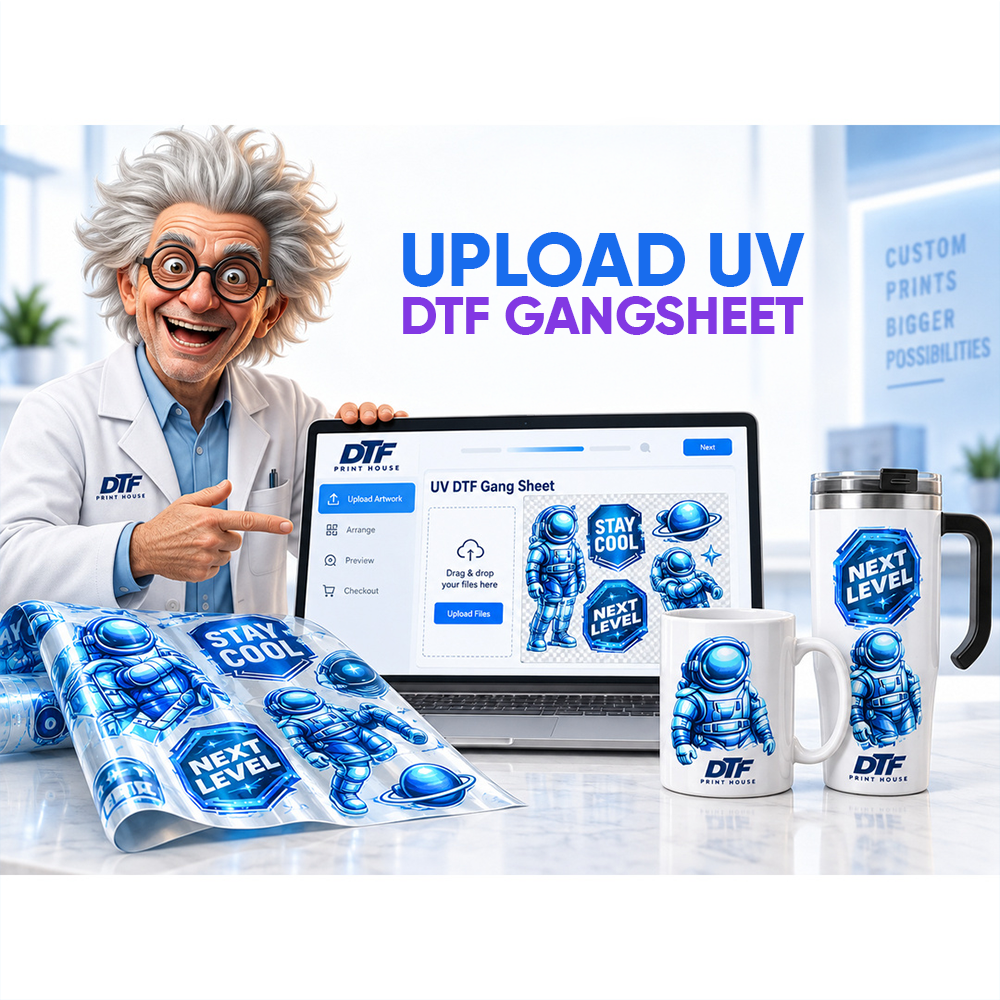
You can also upload a gang sheet when you need several designs on one layout.
Why DTF Printing Supports Business Growth
Growth becomes easier when production can match actual demand.
Traditional methods may require screens, setup charges, or larger minimum quantities.
DTF transfers can make smaller runs and personalized orders more practical.
This helps new businesses enter the market without purchasing large amounts of finished inventory.
Test Products Before Buying Large Quantities
One of the biggest apparel risks is ordering products that customers do not want.
You may select the wrong color, garment style, size range, or design concept.
DTF printing allows you to test an idea with a smaller quantity.
You can press a sample, create product photos, and collect customer feedback.
Sales data can then guide future orders.
This approach reduces guesswork and helps protect working capital.
Accept Short Runs and Personalized Orders
Customers do not always need hundreds of identical garments.
A family may need ten reunion shirts.
A business may need twenty employee shirts.
A creator may need a limited product release.
A sports team may need different names and numbers.
DTF transfers make these orders easier because separate screens are not required for every color.
Expand into New Garment Categories
A growing apparel company can sell more than standard T-shirts.
Compatible products may include hoodies, sweatshirts, tote bags, uniforms, workwear, and youth garments.
Each category can create a new revenue opportunity.
However, expansion should happen gradually.
Test every product and record the correct pressing process before adding it to your store.
Start with a small group of dependable products and add new items only after the workflow becomes repeatable.
Choose the Right DTF Transfer Ordering Method
Your order method affects cost, production speed, and artwork preparation.
Two common options are individual transfers by size and custom gang sheets.
The best option depends on the number of designs, dimensions, and order volume.
Custom DTF Transfers by Size
Transfers by size are useful when you need a clear quantity of one design.
You select the required dimensions and upload the artwork.
This option is convenient for sellers who do not want to arrange a complete film layout.
It can also reduce preparation time for simple orders.
For example, you may need twenty identical front designs for a local company.
Ordering DTF transfers in specific sizes keeps the process direct.
This method is also helpful when artwork sizes differ between adult, youth, and left-chest placements.
Uploaded Gang Sheets
A gang sheet combines several designs on one film layout.
The layout may contain repeated logos, different designs, or multiple print sizes.
This option can make better use of available film space.
It may reduce the cost per design when the layout is prepared efficiently.
Gang sheets are helpful for clothing brands with several products or print shops with mixed customer orders.
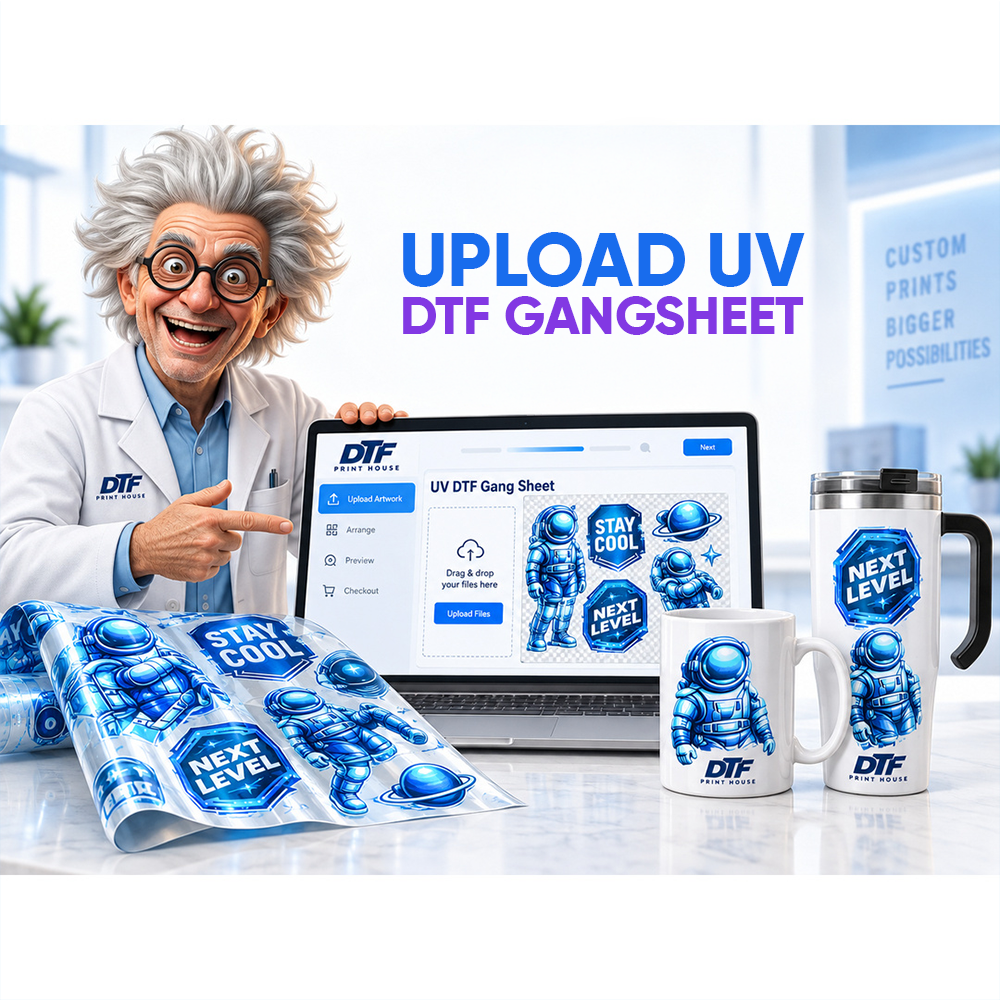
The DTF gang sheet upload option is designed for prepared artwork layouts.
You remain responsible for arranging the designs at the correct dimensions.
Individual Transfers vs. Gang Sheets
| Order Type | Best For | Main Benefit | Important Requirement |
|---|---|---|---|
| Transfers by size | Simple orders and repeated designs | Easy ordering and less layout work | Correct artwork dimensions |
| Uploaded gang sheet | Multiple designs or mixed sizes | Efficient use of film space | Proper layout preparation |
| Repeated logo sheet | Uniforms and branded workwear | Lower cost per repeated logo | Consistent spacing and sizing |
| Mixed product sheet | Apparel collections and samples | Several products from one sheet | Accurate labels and organization |
Choose custom transfers by size when simplicity is the priority.
Choose the upload gang sheet service when you can use film space more efficiently.
Build a Profitable DTF Product Strategy
DTF printing is a production solution, but it does not replace a clear business model.
You still need to understand your customers, products, pricing, and sales channels.
Define Your Target Customer
A clear target audience makes product decisions easier.
Your business may serve local companies, schools, teams, fashion customers, creators, or event organizers.
Each market values different benefits.
A company buyer may prioritize consistency and deadlines.
A fashion customer may prioritize design originality and garment quality.
A school may need a simple ordering process for several sizes.
Understanding these needs helps you create stronger offers.
Start with a Focused Product Range
Offering too many products can create inventory and production problems.
Begin with several garments that are easy to source and press.
A practical collection may include a T-shirt, premium T-shirt, sweatshirt, and hoodie.
You can add tote bags, youth products, or uniforms after testing demand.
Use consistent garment models whenever possible.
This makes sizing, pricing, photography, and production easier.
Use Product Collections
Collections help customers find related products.
A business collection may include employee shirts, hoodies, and branded tote bags.
A school collection may include student apparel, staff shirts, and event merchandise.
A clothing brand may launch products by theme, season, or design style.
DTF transfers allow you to test each collection without ordering large finished quantities.
Create Bundles
Bundles can increase the average order value.
A family bundle may include matching adult and youth shirts.
A company bundle may include several garments with the same logo.
A creator bundle may combine a shirt, hoodie, and tote bag.
The bundle must offer a clear benefit instead of simply combining unrelated products.
Calculate the True Cost of DTF Apparel
Healthy growth requires accurate pricing.
Many sellers calculate the blank garment and transfer but ignore other expenses.
This can produce revenue without enough profit.
Include Every Direct Cost
Your product cost should include the blank garment.
It should also include the DTF transfer, packaging, labor, and payment fees.
Shipping supplies, labels, tape, and inserts must be included.
A small allowance for damaged garments and misprints is also important.
Value Your Production Time
Your time has a cost, even when you operate from home.
Production involves receiving garments, sorting transfers, pressing, checking, folding, and packing.
Customer communication and artwork review also require time.
Record how long each order takes.
This helps you create more realistic labor costs.
Compare Transfer Costs
The best transfer method may change according to the order.
Individual transfers may be easier for a small repeated design.
A gang sheet may be more cost-effective for multiple designs.
Compare the complete cost rather than only the sheet price.
Include the time needed to arrange, cut, label, and organize the transfers.
Protect Your Margin
Discounts should not remove the profit from an order.
Set a minimum acceptable margin before creating promotions.
Review the effect of card fees, advertising costs, shipping support, and refunds.
Growing sales is useful only when each sale supports the business.
- Blank garment cost
- DTF transfer cost
- Pressing and handling labor
- Packaging materials
- Transaction and selling fees
- Expected replacement allowance
- Marketing cost per order
- Required profit margin
Prepare Better Artwork for DTF Printing
Professional results begin with properly prepared artwork.
A heat press cannot repair a low-resolution file or remove an unwanted background.
Use the Correct Print Dimensions
Prepare the file at the size needed on the garment.
A left-chest logo should not use the dimensions of a full-front design.
Create a standard print-size guide for your business.
Include adult fronts, youth fronts, backs, sleeves, and left-chest positions.
This improves consistency across repeated orders.
Check Resolution
Low-resolution artwork may look blurred when enlarged.
Use a clean, high-resolution file whenever possible.
Inspect the design at its intended print size.
Pay attention to small lettering, thin lines, and detailed edges.
Order a sample when the artwork contains difficult elements.
Remove Unwanted Backgrounds
Transparent artwork should not contain a hidden white box.
Check the file against different background colors.
This can reveal unwanted pixels around the design.
Clean edges create a more professional finished product.
Prepare Gang Sheets Carefully
Every design must be placed at the exact required size.
Leave enough space for cutting.
Do not overlap designs or place them outside the print area.
Arrange repeated designs in an organized pattern.
Label different customer designs when the sheet contains several orders.
Review the final dimensions before using the custom gang sheet uploader.
Create a Reliable Heat-Press Workflow
The quality of the transfer matters, but application quality is equally important.
Heat, time, pressure, placement, and peeling must remain consistent.
Use a Suitable Heat Press
A dependable heat press should provide even pressure across the design area.
Cold sections can cause poor adhesion.
Uneven pressure may cause parts of the design to lift.
Check the platen temperature regularly.
The displayed temperature may differ from the actual surface temperature.
Prepare the Garment
Place the garment smoothly on the press.
Keep seams, pockets, and zippers away from the main pressure area.
Use a suitable pressing pillow when needed.
A short pre-press may remove moisture and wrinkles.
Follow the transfer supplier’s current instructions.
Control Placement
Inconsistent placement makes even a good print look unprofessional.
Use alignment tools or templates for repeated orders.
Mark standard positions for front, back, sleeve, and chest designs.
Check the first garment before producing the full order.
Follow the Correct Peel Instructions
Transfers may require a hot, warm, or cold peel.
Peeling too early can damage the design.
Peeling too late may also affect the workflow.
Use the instructions provided with the transfer.
Do not assume settings from another supplier will produce the same result.
Document Successful Settings
Create a record for every garment and transfer combination.
Record temperature, time, pressure, peel type, and finishing steps.
Add notes about garment composition and surface texture.
This information supports consistency as the business grows.
Market Your DTF Printing Business
Strong production is not enough if customers cannot find your products.
Marketing should show the product, process, and customer benefit.
Use Real Product Photos
Photograph actual finished garments whenever possible.
Customers want to see the design size, print detail, and garment fit.
Use clear lighting and simple backgrounds.
Include close-up images and full product views.
Show different angles when the print location is important.
Create Production Videos
Short videos can show the transfer, heat press, peel, and final result.
This helps customers understand the production process.
It also provides useful content for social media.
Show real work rather than relying only on digital mockups.
Publish Educational Content
Helpful content can attract people researching custom apparel.
Explain artwork preparation, garment selection, print sizing, and care instructions.
Answer common questions before customers contact you.
Educational content can also support organic search visibility.
Build an Email List
Email allows you to reach previous visitors and customers directly.
Send new product announcements, seasonal launches, and practical tips.
Segment business buyers and individual shoppers when possible.
Different audiences need different messages.
Offer Clear Ordering Options
Customers should understand how to submit artwork and select a product.
Explain whether you offer finished garments, transfers, or both.
Businesses that press their own garments can visit DTF PrintHouse for ready-to-press solutions.
Customers needing individual designs can order custom transfers by size.
Customers with prepared layouts can use the gang sheet upload page.
Scale DTF Production Without Losing Quality
Production problems often appear when sales grow faster than the workflow.
A system that handles five orders may fail when fifty orders arrive.
Create Standard Operating Procedures
Write instructions for artwork approval, transfer ordering, pressing, checking, and packing.
Include photographs for tasks that require visual guidance.
Document common errors and the correct solution.
Written procedures make employee training easier.
Use Production Checkpoints
Check the order before pressing begins.
Confirm garment style, color, size, design, placement, and quantity.
Inspect the first finished garment.
Complete a final check before packing.
These steps can prevent repeated mistakes.
Organize Transfers
Label transfers by customer, design, size, and order number.
Keep mixed gang sheet designs separated after cutting.
Store transfers in a clean and dry area.
Protect printed surfaces from dust, moisture, and damage.
Good organization reduces production delays.
Track Important Numbers
Monitor revenue, product margin, average order value, and production time.
Track replacement rates and customer complaints.
Review which products create profit rather than only sales volume.
Compare marketing costs with the profit generated by new customers.
Use these numbers before increasing advertising or inventory.
Work with a Reliable Transfer Partner
Consistent transfer quality supports consistent garment quality.
Your supplier should provide clear ordering options and useful application guidance.
DTF PrintHouse transfer services can support both small and growing production needs.
Use transfers ordered by size for straightforward production.
Use an uploaded gang sheet for mixed artwork and efficient layouts.
Common Mistakes That Limit DTF Business Growth
Offering Too Many Products
A large catalog creates more sourcing, sizing, photography, and testing work.
Start with products that support your main audience.
Add new items when the existing range is profitable and manageable.
Competing Only on Price
Another seller can usually offer a lower price.
Build value through quality, communication, garment selection, speed, or specialized service.
Explain why your finished product is worth the price.
Skipping Test Presses
One setting may not work for every fabric.
Garment coatings, seams, and heat sensitivity can affect the result.
Test unfamiliar products before starting a large order.
Ignoring Artwork Rights
Do not print copyrighted artwork without permission.
Use original designs, licensed files, or customer artwork with proper authorization.
Keep records when commercial usage rights are important.
Using Incomplete Pricing
Low prices can generate orders while weakening the business.
Include labor, waste, selling fees, packaging, and support time.
Review prices when costs change.
Growing Before the System Is Ready
Advertising can increase sales quickly.
However, sales growth can create delays and quality problems.
Improve the workflow before increasing order volume.
A Step-by-Step DTF Printing Growth Plan
- Choose a specific target customer.
- Select a small range of reliable garments.
- Create original and high-resolution artwork.
- Set standard print sizes for each garment type.
- Order samples before launching a large collection.
- Compare transfers by size with uploaded gang sheets.
- Document heat-press settings and placement standards.
- Calculate the complete cost of every product.
- Create real product photos and useful descriptions.
- Launch a focused collection and measure customer response.
- Improve weak parts of the production workflow.
- Expand products and marketing only after quality is consistent.
DTF printing supports growth when flexible production is combined with accurate pricing, organized systems, and dependable quality.
Frequently Asked Questions About Growing with DTF Printing
Can a beginner start a business with DTF printing?
Yes. Beginners can order ready-to-press transfers and apply them with a suitable heat press.
Do I need to own a DTF printer?
No. Many businesses order transfers from a professional supplier and focus on garment production and sales.
What is the difference between transfers by size and gang sheets?
Transfers by size are ordered individually, while gang sheets combine several designs on one prepared layout.
When should I use a custom gang sheet?
Use a gang sheet when you have several designs, repeated logos, or mixed print sizes that fit efficiently on one sheet.
Is DTF printing suitable for small orders?
Yes. DTF transfers are useful for short runs, samples, personalized products, and limited apparel collections.
What garments can be used with DTF transfers?
Many cotton, polyester, blend, and compatible textile products can be decorated after proper testing.
How should I price DTF printed products?
Include the garment, transfer, labor, packaging, fees, expected waste, marketing costs, and required profit.
How can I improve transfer durability?
Use compatible garments and follow the correct heat, time, pressure, peel, and finishing instructions.
What artwork quality is required?
Use clean, high-resolution artwork at the correct physical dimensions with unwanted backgrounds removed.
How can I scale without losing print quality?
Document each process, use quality checkpoints, organize transfers, train staff, and track production results.
Start Growing with DTF PrintHouse
Choose professional ready-to-press transfers for custom apparel, business orders, clothing brands, events, and print shops.
Explore DTF PrintHouse Order Transfers by Size Upload a Gang SheetGrow with DTF printing through flexible ordering, dependable production, and a repeatable custom apparel workflow.
```