


Iron On Decals for T-Shirts: What They Are, How They Work, and a Better Custom Option

Iron on decals for t shirts are one of the simplest ways to put a design, name, logo, or graphic onto a shirt. Most people search for them because they want a custom look without dealing with complicated printing equipment, high minimum orders, or a long production process.
But there is an important difference between old-school iron-on decals and modern custom transfers. Traditional iron-on decals are usually pre-made designs sold on sheets, while today’s DTF transfer options let you print your own full-color artwork and apply it with heat.
That matters if you want more than a basic craft decal. If you are decorating one shirt for a gift, making team shirts, selling apparel, or preparing small business merch, custom DTF transfers give you the same heat-and-press simplicity with better color, stronger durability, and more flexibility.
DTF Print House is a Stafford, TX-based DTF printer offering no-minimum custom transfers, same-day production on qualifying orders, and options for both single designs and full gang sheets.
What Are Iron-On Decals for T-Shirts?
Iron-on decals for t-shirts are designs that bond to fabric when heat and pressure are applied. A decal usually comes on a carrier sheet, paper backing, or film layer. You place it on the shirt, press it with a household iron or heat press, then peel away the backing after the design has transferred.
The term “iron-on decal” is often used broadly. Some people mean a pre-cut vinyl graphic. Others mean a printed transfer sheet. Some simply mean any design that can be applied to a shirt with heat.
The most common traditional types are heat transfer vinyl (HTV) and printed transfer paper. HTV is cut from colored vinyl sheets, weeded by hand, and pressed onto fabric. It works well for simple names, numbers, and single-color graphics. Printed transfer paper is usually made with an inkjet or laser printer, then applied with a household iron.
These products have been popular for decades because they are easy to understand. You buy a decal, place it on a shirt, apply heat, and get a decorated garment. That is why marketplaces like Etsy, Amazon, and Walmart are full of ready-made iron-on decals for t shirts.
The limitation is customization. If you want a specific logo, photo, brand graphic, or full-color design, a pre-made decal sheet may not give you what you need. That is where custom DTF transfers become the better modern version of the same idea.
For a deeper explanation of the modern transfer method, read what is a DTF transfer, explained.
How to Iron On Decals for T-Shirts — Step-by-Step
The exact application process depends on the product you buy, so always follow the instructions that come with your decal. Still, most iron-on decals for t shirts follow the same basic process.
- Preheat your iron with no steam. Most decals need high heat, often close to a cotton setting. Turn off steam because moisture can weaken the adhesive.
- Use a hard, flat surface. Place the shirt on a firm table, countertop, or pressing pad. Do not use a soft ironing board cushion because it absorbs pressure and can cause uneven bonding.
- Prepare the shirt. Smooth the fabric and make sure there are no wrinkles. A quick pre-press for a few seconds can remove moisture from the shirt.
- Position the decal carefully. Place the design exactly where you want it. Some transfer paper products go design-side down. Some HTV decals go carrier-side up. Check the product directions before pressing.
-
Press firmly for 20–30 seconds per section. Apply strong, steady pressure. If the design is larger than the iron, move in overlapping sections so every part receives heat.

- Peel the backing correctly. Some products require a hot peel, which means peeling while the transfer is still warm. Others require a cold peel, which means waiting until the design cools.
- Let the shirt cool before wearing or washing. Give the adhesive time to set before stretching, folding, or laundering the shirt.
Application note: The biggest issue with a household iron is consistency. A regular iron cannot deliver the same even heat and firm pressure as a heat press. That is why DIY iron-on decals often peel, crack, or lift around the edges after washing.
If you plan to press DTF transfers or make shirts regularly, a heat press gives a cleaner and more durable result. You can also see our full guide on applying DTF transfers like a pro and compare cold peel vs hot peel film before choosing your transfer type.
Need a shirt first? You can also see our blank apparel options.
Custom and Personalized Iron-On Decals for T-Shirts

When people search for custom iron on decals for t shirts, they usually do not want a generic design from a pack. They want their own artwork on a shirt. That might be a business logo, a family reunion design, a sports team name, a photo, a memorial shirt, a school design, or a small batch of merch.
This is the strongest reason to choose DTF transfers instead of old-school decal sheets.
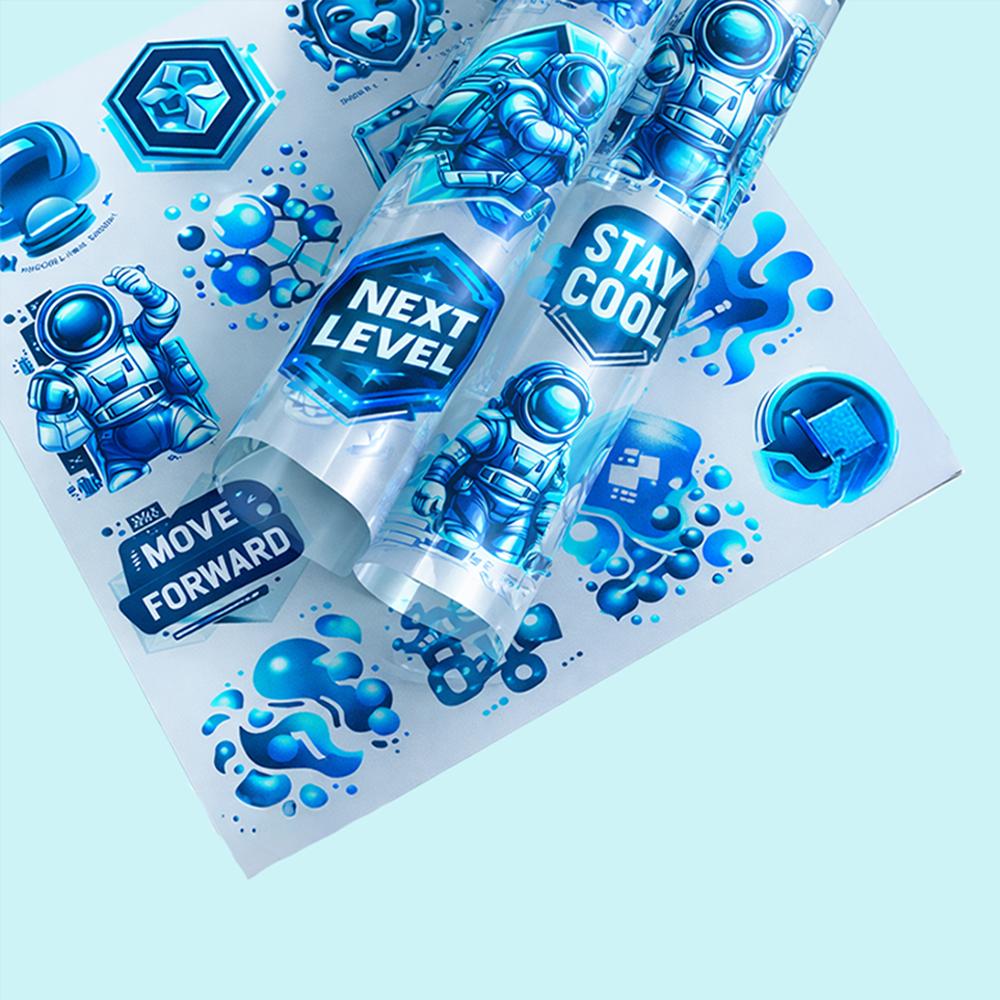
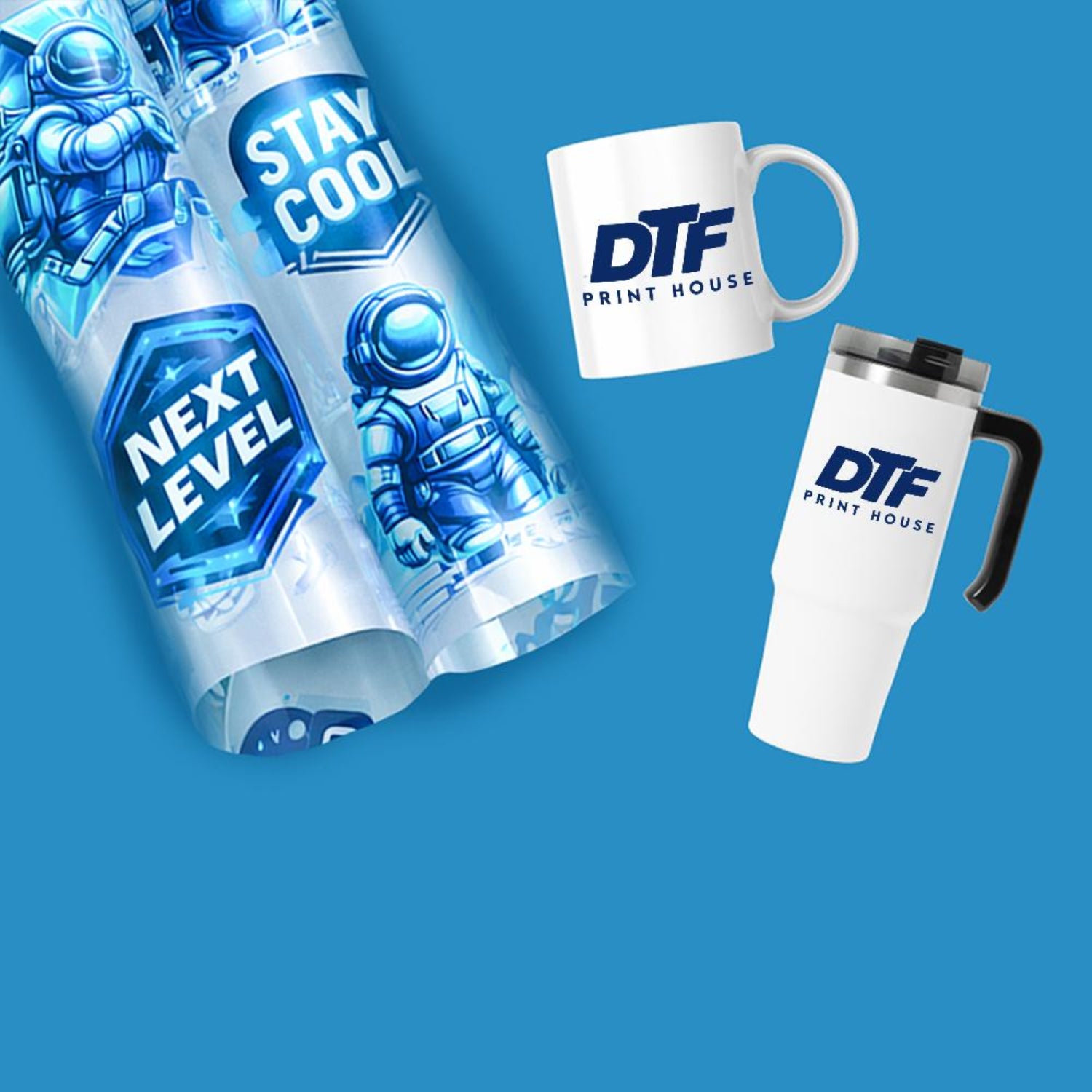
A DTF transfer is printed in full color on PET film and applied to fabric with heat and pressure. Unlike traditional vinyl, it does not require cutting every color separately. That means gradients, photos, small details, shadows, and multi-color logos are much easier to produce.
DTF also works on cotton, polyester, and blends, which makes it more flexible than many traditional iron-on decals. You can order one design, multiple sizes, or several graphics on one sheet.
If you only need one design, you can order a custom DTF transfer by size. This is ideal for one shirt, one logo, one gift, or one test print.
If you need multiple designs, you can build your own DTF gang sheet. A gang sheet lets you place several logos, names, pocket prints, sleeve graphics, or full-front designs on one sheet, then cut and press them as needed.
This is especially helpful for Etsy sellers, print shops, small brands, school groups, and event organizers. Instead of buying separate pre-made decals, you can create personalized iron on decals for t shirts using your own artwork and print them in a professional format.
For sizing help, read our full DTF size chart. To understand how gang sheets save space and money, see what gang sheets are and how they save money.
Want your own design instead of a pre-made decal?
Order a custom DTF transfer and get full-color printing with no minimum order. It is a cleaner, more flexible option for custom shirts, brand graphics, event apparel, and small-batch merch.
Order a Custom DTF TransferIron-On Decals vs. DTF Transfers — What’s the Real Difference?
Traditional iron-on decals and DTF transfers are both applied with heat, but they are not the same product. The difference is in the print method, adhesive, color capability, fabric compatibility, and final durability.
| Feature | Traditional Iron-On Decal | DTF Transfer |
|---|---|---|
| Application | Household iron | Heat press recommended |
| Color | Often limited or single-color | Full-color, gradients, photos |
| Detail | Best for simple shapes and text | Handles small details and complex artwork |
| Durability | Often cracks or peels sooner | Holds up through 50+ wash cycles when applied correctly |
| Fabric compatibility | Often best on cotton | Works on cotton, polyester, and blends |
| Minimum order | Usually sold in packs or sheets | Order one transfer or a gang sheet |
| Best for | Crafts, costumes, quick DIY shirts | Custom apparel, business orders, resale, events |
The reason DTF performs differently is the way the design is printed and bonded. A DTF transfer uses printed ink, adhesive powder, and a carrier film. When heat and pressure are applied correctly, the design bonds strongly to the fabric while keeping a soft, flexible feel.
Traditional HTV can still be useful. It is great for simple text, numbers, and one-color designs. Pre-made iron-on decals are also fine for kids’ crafts, costumes, or quick one-time projects. They are cheap, easy to find, and simple to apply.
But if the design needs to look professional, match your brand, include full color, or survive repeated washing, DTF is usually the better choice. It gives you the familiar iron-on transfer experience with a more modern production method.
You can browse our best-selling DTF transfers to see common transfer options, or learn how to apply DTF transfers to shirts before placing an order.
If you are comparing print methods for a business, you may also want to see how DTF stacks up against screen printing.
Where to Buy Iron-On Decals for T-Shirts
If you want a pre-made design, iron-on decals for t shirts are easy to find. Etsy, Amazon, and Walmart all sell ready-made decal sheets, vinyl graphics, letters, numbers, patches, and themed designs. These are good options when you want a quick off-the-shelf graphic and do not need custom artwork.
For example, someone searching iron on decals for t shirts walmart is probably comparing low-cost, ready-made options. That makes sense for a simple craft shirt or a one-time design.
But if you need your own design, a print shop that produces custom transfers is usually the better source. Instead of picking from a catalog, you upload your artwork and receive a transfer made specifically for your shirt.
That is the difference between buying a decal and ordering a custom print.
At DTF Print House, you can order by size, create a gang sheet, or upload a finished gang sheet file. If you are local or want fast turnaround, you can also shop DTF transfers near you.
For multiple designs, names, logos, or shirt placements, upload your own gang sheet design. This is one of the most efficient ways to turn several custom graphics into press-ready transfers.
Skip the multi-packs.
Build a gang sheet and pack as many custom designs as you need onto one sheet. It is ideal for names, logos, pocket prints, sleeve prints, and multiple shirt designs.
Build a DTF Gang SheetHow to Make Your Own Iron-On Decals at Home
You can make iron-on decals at home, but the best method depends on the design.
The first option is printable iron-on transfer paper. You print the design on a home inkjet or laser printer, cut around it, and press it onto a shirt. This can work for simple personal projects, but the color vibrancy and wash durability are usually limited. It can also feel stiff, especially if the design has a large background area.
The second option is HTV with a cutting machine like a Cricut or Silhouette. This works well for simple names, numbers, and solid-color artwork. The process takes more time because you need to cut, weed, position, and press each design. Multi-color artwork requires multiple layers, which can become difficult quickly.
The third option is to prepare your artwork at home, then send it to a DTF printer. This gives you a cleaner result without buying transfer paper, ink, vinyl rolls, adhesive powder, or professional printing equipment.
For basic craft projects, DIY methods are fine. But for full-color logos, photos, detailed artwork, business merch, or customer orders, DTF transfers usually save time and reduce mistakes. Once you factor in wasted paper, failed attempts, and inconsistent pressure from a household iron, ordering a professional transfer can be more practical than making everything from scratch.
That is why many people who start by searching how to make iron on decals for t shirts end up choosing custom DTF transfers instead.
Tips for a Long-Lasting Iron-On Decal
Whether you use traditional iron-on decals or custom DTF transfers, care matters. The way you wash and dry the shirt affects how long the design lasts.
- Wash inside out in cold water. This reduces friction on the design and helps protect the printed surface.
- Use mild detergent and avoid bleach. Harsh chemicals can weaken the adhesive and fade the print.
- Do not iron directly over the design. If you need to press the shirt again, cover the print with parchment paper or a protective sheet.
- Avoid high dryer heat. Tumble dry low or hang dry for better wash durability.
- Wait before the first wash. Give the transfer at least 24 hours before laundering so the adhesive can fully settle.
- Apply with the right pressure. Heat, pressure, peel timing, and washing habits all affect peeling, cracking, and long-term appearance.
A well-applied DTF transfer can hold up through 50+ wash cycles when pressed and cared for correctly. For more detailed care instructions, check our DTF wash durability guide and our DTF washing and care instructions.
FAQ
What are iron-on decals for t-shirts made of?
Iron-on decals for t-shirts are usually made from heat transfer vinyl, printed transfer paper, or a printed film with adhesive. The design bonds to fabric when heat and pressure activate the adhesive layer. Modern DTF transfers use printed ink, adhesive powder, and PET carrier film.
Can I iron on decals for t-shirts with a regular household iron?
Yes, many traditional iron-on decals can be applied with a regular household iron. Use high heat, no steam, and firm pressure on a hard surface. However, a heat press gives more even temperature and pressure, which usually creates a stronger and longer-lasting bond.
How long do iron-on decals for t-shirts last?
Traditional iron-on decals may last several washes, but durability depends on material quality, application pressure, heat, and laundry care. Some cheaper decals crack or peel early. Correctly applied DTF transfers can hold up through 50+ wash cycles with proper washing instructions.
What is the difference between iron-on decals and DTF transfers?
Traditional iron-on decals are often pre-made vinyl or transfer paper designs. DTF transfers are custom full-color prints made on film and applied with heat. DTF transfers handle photos, gradients, logos, and detailed artwork better than most old-school iron-on decal products.
Can I make custom iron-on decals for t-shirts with my own design?
Yes. You can make basic decals at home with printable transfer paper or HTV, but custom DTF transfers are usually better for full-color artwork, logos, photos, and business-quality shirts. You upload your design, choose the size or gang sheet layout, and press the transfer onto the garment.
Do iron-on decals work on polyester shirts?
Some iron-on decals work on polyester, but not all of them. Many traditional products are better suited for cotton. DTF transfers work on cotton, polyester, and blends when applied with the correct heat, pressure, and timing for the garment.
Where can I buy iron-on decals for t-shirts in bulk?
Pre-made iron-on decal packs are available from marketplaces like Etsy, Amazon, and Walmart. If you need custom artwork in bulk, a DTF gang sheet is usually more efficient because you can place multiple logos, names, and designs on one sheet and cut them apart after printing.
Ready to Make Your Own Custom Iron-On Transfer?
If you are decorating one shirt for a gift, order a single custom DTF transfer in the exact size you need. If you are making several designs at once, build a DTF gang sheet and print them all on one sheet.
DTF Print House offers same-day production, pickup, or shipping for qualifying orders placed before 12 PM CT, with no minimum order and free shipping on orders $99+. Transfers work on cotton, polyester, and blends, with sizes starting at 2" × 2" and going up to 22" wide by 20 feet long.